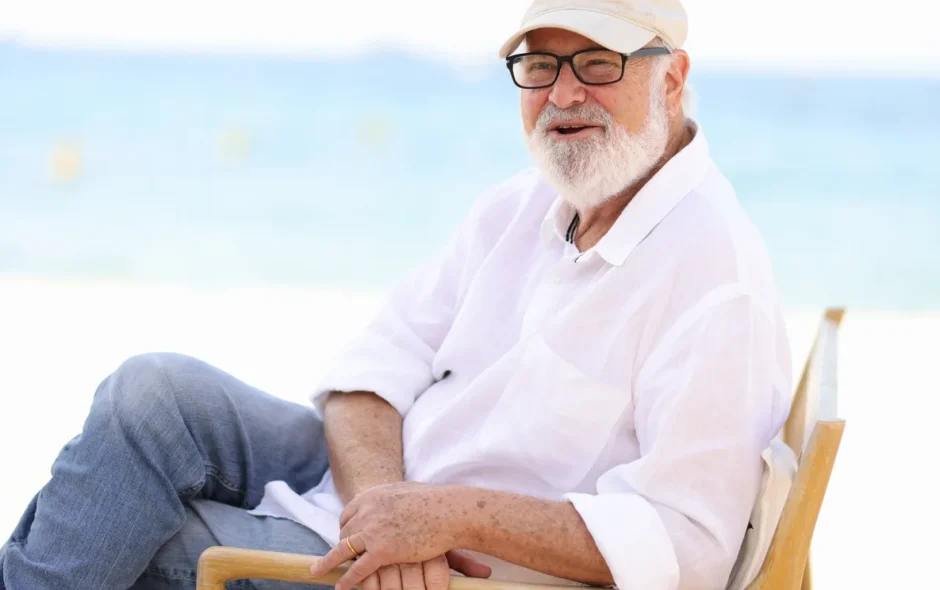
Rob Reiner, the beloved actor, director, producer and activist whose films helped define modern American cinema, and his wife, Michele Singer Reiner, the photographer and creative partner who shared his life and work for more than three decades, died together on December 14, 2025, in a devastating tragedy at their home in Los Angeles. The loss of the couple has sent shockwaves through Hollywood and beyond, prompting an outpouring of grief for two lives so closely intertwined in love, art and purpose.
Born March 6, 1947, Rob Reiner was the son of legendary comedian and writer Carl Reiner, but he forged a voice entirely his own. He first became a household name as Michael “Meathead” Stivic on All in the Family, where his portrayal of a socially conscious, outspoken young man captured the cultural tensions of the 1970s and earned him two Emmy Awards. Yet it was behind the camera that Reiner left his most enduring mark.
Over the course of a remarkable directing career, Reiner demonstrated a rare ability to move effortlessly between genres while never losing sight of the human heart at the center of each story. His films included the mockumentary This Is Spinal Tap, the elegiac coming-of-age classic Stand by Me, the fairy-tale romance The Princess Bride, the sharply observed When Harry Met Sally…, the psychological thriller Misery, and the courtroom drama A Few Good Men. Together, they form one of the most versatile and emotionally resonant bodies of work in late 20th-century American film.
Reiner’s films were known not only for their craftsmanship and wit, but for their generosity of spirit. He believed deeply in character, conversation and moral complexity, and he trusted audiences to meet his stories with intelligence and empathy. Actors frequently spoke of the ease and confidence he inspired on set, and many credited him with some of the finest performances of their careers.
Michele Singer Reiner was far more than a presence at his side. A gifted photographer with a discerning eye, she brought her own artistic sensibility to their shared life and collaborated with Rob on numerous projects. The two met during the production of When Harry Met Sally… and married in 1989, beginning a partnership marked by mutual respect, creative exchange and deep affection. Together they raised three children and built a home grounded in family, curiosity and engagement with the world.
Friends describe Michele as warm, perceptive and quietly influential, someone whose aesthetic instincts and emotional intelligence shaped far more than she ever claimed credit for. Those closest to the couple often remarked that their bond felt seamless, as if each strengthened and steadied the other.
Outside of filmmaking, Rob Reiner was an outspoken advocate for causes he believed in, including marriage equality, early childhood education and civic participation. He used his platform not cautiously, but earnestly, convinced that public life demanded moral engagement. His activism was not an extension of celebrity legacy-building, but an expression of the same ethical curiosity that animated his films.
The deaths of Rob and Michele Singer Reiner mark the loss of two singular creative spirits and a partnership that exemplified devotion, collaboration and shared vision. Their legacy lives on in the films that continue to shape generations of viewers, in the images Michele captured, and in the family and community they nurtured together.