
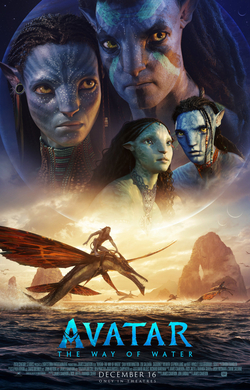
The world of Pandora is opening once again. James Cameron’s long-awaited new Avatar film—the third chapter in the sprawling saga he began in 2009—has begun its slow reveal, and while Cameron has kept the tightest of lids on marketing, enough has emerged to give audiences a sense of where the story is headed and how early viewers are responding. What’s clear already is that this installment deepens the family narrative at the center of Avatar: The Way of Water while widening the lens on the cultures, mythology, and internal conflicts of the Na’vi themselves.
The story picks up not long after the turbulent events that forced Jake Sully and Neytiri to uproot their family and seek protection among the Metkayina clan. Their victory, such as it was, left open wounds—personal, cultural, and ecological—and Cameron seems intent on exploring the consequences. This time, the Sullys find themselves entangled with a new Na’vi culture, long rumored and now confirmed: a fire-based people who live in volcanic highlands far from the oceanic calm Jake and Neytiri briefly sought. Where The Way of Water introduced a clan shaped by the sea, this film turns to a harsher, more combustible landscape—and a people whose outlook is shaped by fire, scarcity, and survival.
The emotional heart of the story remains the Sully family, particularly their children, whose coming-of-age arcs have taken on the weight of the narrative. Cameron’s fascination with generational struggles—legacy, loyalty, rebellion—appears to drive the conflict in this chapter. Ties between clans are fraying, and the central question becomes whether Jake’s desire to protect his family conflicts with Pandora’s broader need for unity as human forces continue their relentless push to colonize the moon’s resources. Rumors also suggest the return of some familiar adversaries, though in forms that expand the franchise’s ongoing interest in identity, memory, and the very definition of humanity.
Early reactions from preview screenings have been consistent in one respect: whatever else Cameron is doing, he is once again pushing the boundaries of world-building. The volcanic regions of Pandora have been described as some of the most visually arresting environments the series has created, with bioluminescent lava plains, heat-shimmered forests, and towering basalt formations that reshape the visual language of the franchise. Viewers have also remarked on the deeper cultural specificity of the new clan, noting that they feel distinct not only in appearance but in worldview—a sign that Cameron hasn’t exhausted his anthropological imagination.
Reception to the story itself has been cautiously enthusiastic. Those who loved the family-centered storytelling of the previous film say this chapter feels more intimate yet simultaneously more politically charged. There are hints of internal Na’vi disputes, with factions questioning whether Jake Sully’s leadership—once a unifying force—is now a liability. Some early viewers suggest the Sullys themselves face a reckoning, as the shadow of past decisions begins to color their relationships with the new clan.
What has surprised people most, though, is the tone. Rather than following the triumphant rhythm of many second installments, this film appears to lean into moral ambiguity and difficult choices. Several reactions have compared it to the “middle movement” of an operatic cycle—darker, riskier, and more resigned to the reality that peace on Pandora may be as fragile as its ecosystems. Yet nearly every early viewer has emphasized that the film remains emotionally riveting, with its most powerful sequences anchored in quiet family moments rather than spectacle alone.
If anything, the excitement around this new Avatar comes from a sense that Cameron is building toward something larger than a series of sequels. Pandora is no longer a backdrop but a living, evolving world—one that mirrors the fault lines and hopes of our own. And judging from the early buzz, audiences are ready to step back into its glow, eager to see where the Sullys go next, and what price is exacted for their place in a world perpetually on the brink.