The Academy Awards will leave ABC behind and move exclusively to YouTube beginning with the 2029 ceremony, marking the most dramatic distribution shift in the show’s 101-year history and effectively ending the Oscars’ half-century run on traditional broadcast television.
The decision reflects a reality the film industry has been slow to confront but can no longer ignore: the audience that once gathered around network television sets on a Sunday night now consumes culture on demand, across devices, platforms, and time zones. By choosing YouTube, the Academy of Motion Picture Arts and Sciences is betting that the future of its most visible event lies not in preserving the rituals of broadcast television, but in reimagining them for a digital-first world.
For ABC, which first aired the Oscars in 1976, the move closes a chapter defined by glitzy exclusivity and increasingly uneasy coexistence with shrinking linear audiences. Ratings erosion has been a recurring storyline for awards shows over the past decade, with younger viewers abandoning scheduled television altogether. While ABC and the Academy experimented with streaming simulcasts and social media extensions in recent years, those efforts increasingly felt like stopgaps rather than solutions.
YouTube offers something broadcast television can no longer provide at scale: global reach without a fixed schedule. The Oscars on YouTube will be free to watch worldwide, accessible on phones, tablets, televisions, and laptops, and designed to live long beyond the three-hour telecast window. Viewers will be able to join live, dip in and out, or watch curated highlights afterward, a fundamental shift from the once-sacrosanct idea that the ceremony must be experienced in real time.
The Academy has signaled that the show itself will change as well. Rather than a single uninterrupted broadcast, the YouTube Oscars are expected to blend a live main event with parallel streams, backstage feeds, nominee roundtables, and international coverage tailored to different regions. Acceptance speeches may still unfold on the Dolby Theatre stage, but audiences will have the option to follow specific categories, films, or performers without committing to the entire ceremony.
For Hollywood, the move is both pragmatic and symbolic. The Oscars have long served as an industry mirror, reflecting how movies are made, marketed, and consumed. As studios themselves pivot from theatrical-only strategies to hybrid and streaming-centric models, it would have been increasingly discordant for the industry’s most visible celebration to remain tethered exclusively to a broadcast ecosystem in decline.
There are risks, of course. Broadcast television once guaranteed a shared national moment, a monoculture effect that turned Oscar night into a collective ritual. YouTube’s vastness can fragment attention as easily as it amplifies it. The Academy will have to work harder to preserve a sense of occasion, to make the ceremony feel like an event rather than just another stream competing for clicks.
Yet the potential upside is difficult to ignore. YouTube’s scale offers access to audiences the Oscars have struggled to attract for years, particularly viewers under 35 and international fans whose engagement with film culture is already deeply digital. Advertisers, too, are likely to follow, drawn by targeted reach and measurable engagement rather than the blunt instrument of traditional ratings.
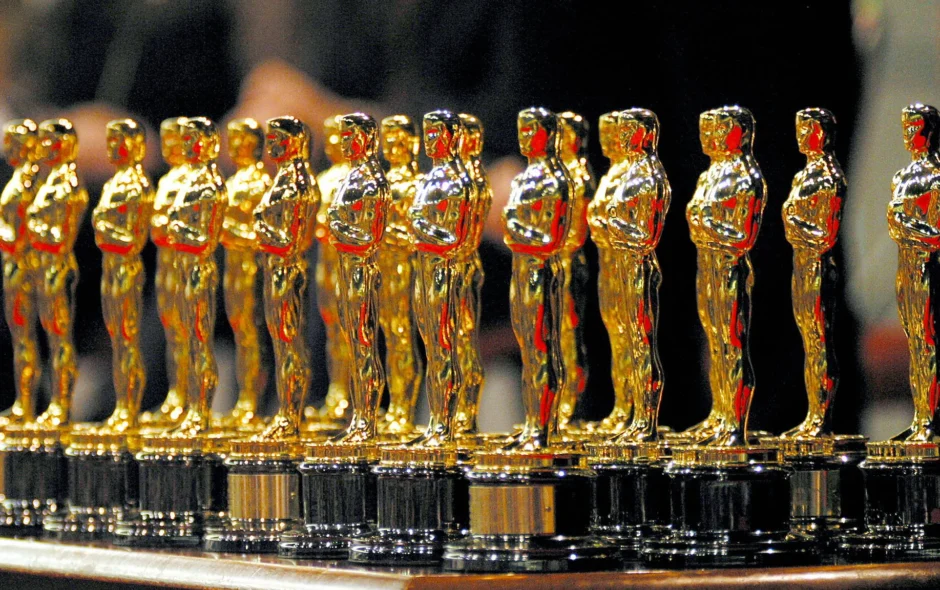
The 2029 ceremony will arrive at a moment when the definition of “television” has all but dissolved. In that sense, the Oscars are not abandoning tradition so much as acknowledging it has already moved. The gold statuette will still represent cinematic achievement, but the stage on which it is celebrated is changing, trading the certainty of broadcast for the unpredictability of the open platform.
After nearly a century of adapting to sound, color, satellite feeds, and high definition, the Academy is once again redefining how Hollywood tells its most important story. This time, the audience won’t be tuning in. They’ll be clicking.