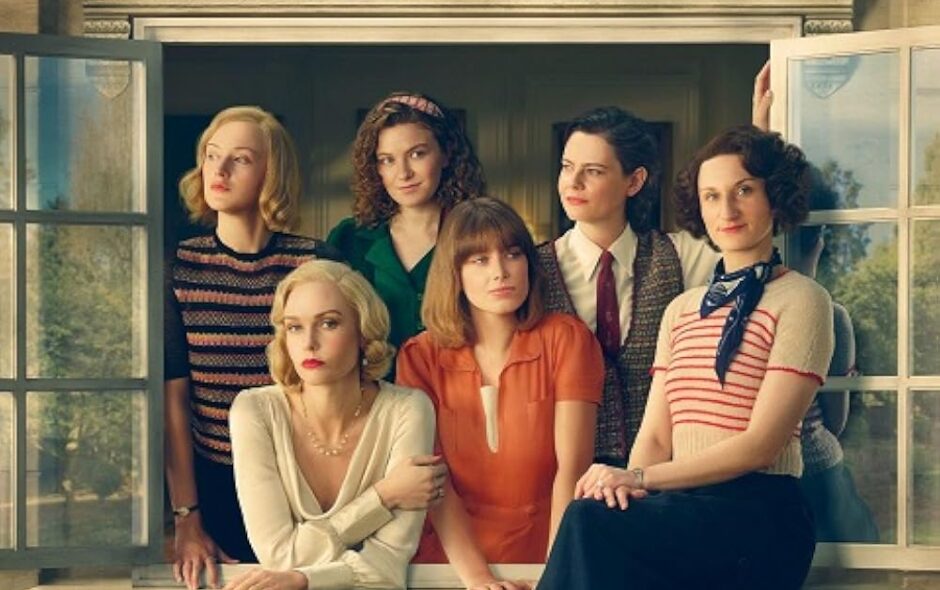
The new period drama Outrageous sweeps onto the screen with the kind of lavish energy and historical resonance that invites both fascination and unease. The six-part series dramatizes the lives of the six Mitford sisters—Nancy, Pamela, Diana, Unity, Jessica, and Deborah—whose extraordinary and often scandalous choices embodied the contradictions of Britain between the wars.
Set during the turbulent years of the 1930s, the show re-creates a world teetering between elegance and extremism. Against a backdrop of social unrest, collapsing empires, and the rise of fascism and communism, Outrageous asks how a single aristocratic family could splinter so dramatically along ideological lines. The Mitfords’ real lives were stranger and more shocking than fiction: one sister fell under the spell of Adolf Hitler, another ran off with a British fascist leader, another became a Communist activist and writer, and still another chronicled their world with biting humor and irony.
In dramatizing this story, the series captures more than the biography of one family; it mirrors the instability of an entire age. Through extravagant parties, hushed drawing-room conversations, and tense political encounters, Outrageous brings to life a generation born into privilege yet consumed by conflicting beliefs. The series reflects the question that has haunted historians ever since: how did so many people of wealth and refinement become seduced by extremes?
The timing of Outrageous feels almost prophetic. At a moment when ideological polarization dominates public life once again, the Mitfords’ descent into discord feels both remote and familiar. Their names once evoked style, wit, and scandal in the London tabloids. Today, through the prism of drama, they stand as symbols of how easily family, loyalty, and even love can fracture under the weight of conviction.
The production spares no expense in evoking the era. From the glittering soirées of Mayfair to the bleak European landscapes of prewar politics, the cinematography and costume design offer a feast for the eyes. Yet the show’s emotional core lies in its portrayal of intimacy and alienation—sisters who adore and despise each other in equal measure, whose shared upbringing cannot save them from ideological estrangement.
Lead actress Bessie Carter’s performance as Nancy anchors the ensemble. Through Nancy’s eyes, we experience both affection and disillusionment as she watches her family drift apart. Her narration lends cohesion to what might otherwise feel like a whirlwind of historical events. Supporting performances add depth to the ensemble: the icy charisma of Diana, the naïve fanaticism of Unity, the rebellious defiance of Jessica. Together they form a tableau of privilege colliding with passion.
Historically, few families encapsulate the contradictions of twentieth-century Britain better than the Mitfords. Their story crosses lines of class, politics, and gender. To bring them to screen now, in an age of renewed political extremism and cultural anxiety, gives Outrageous an unsettling immediacy. It reminds viewers that the chasm between wealth and conscience, comfort and chaos, is never as wide as it seems.
As for what comes next, the question of a second season remains tantalizingly unresolved. The first season concludes with several storylines open, hinting at further drama as war looms and personal allegiances deepen. The creative team has expressed interest in continuing the saga, suggesting that the remaining Mitford years—those of wartime and aftermath—are ripe for exploration. However, no official renewal has yet been announced. Industry watchers describe the show’s future as a “strong possibility,” though not yet a certainty.
Given its critical attention and the enduring intrigue surrounding its real-life subjects, the odds seem favorable. A second season would allow Outrageous to carry the Mitfords into the darkest years of World War II, a period when their loyalties and reputations faced ultimate tests. Until then, the current run stands as a sumptuous and unsettling portrait of privilege and peril, proving that history’s most fascinating stories are often those that refuse to stay in the past.